It’s an odd thing for a tech company to admit in 2026, but we don’t let AI anywhere near our maths.
That isn’t because we’re sceptical of it. Our team uses AI every day, and we’ve built tools that let it work directly with our platform. It’s because, as Head of Engineering at Certino, I spend my days on shadow payroll, working out tax and reporting figures for employees on international assignments, and in that world the most useful thing to know about AI is where it doesn’t belong.
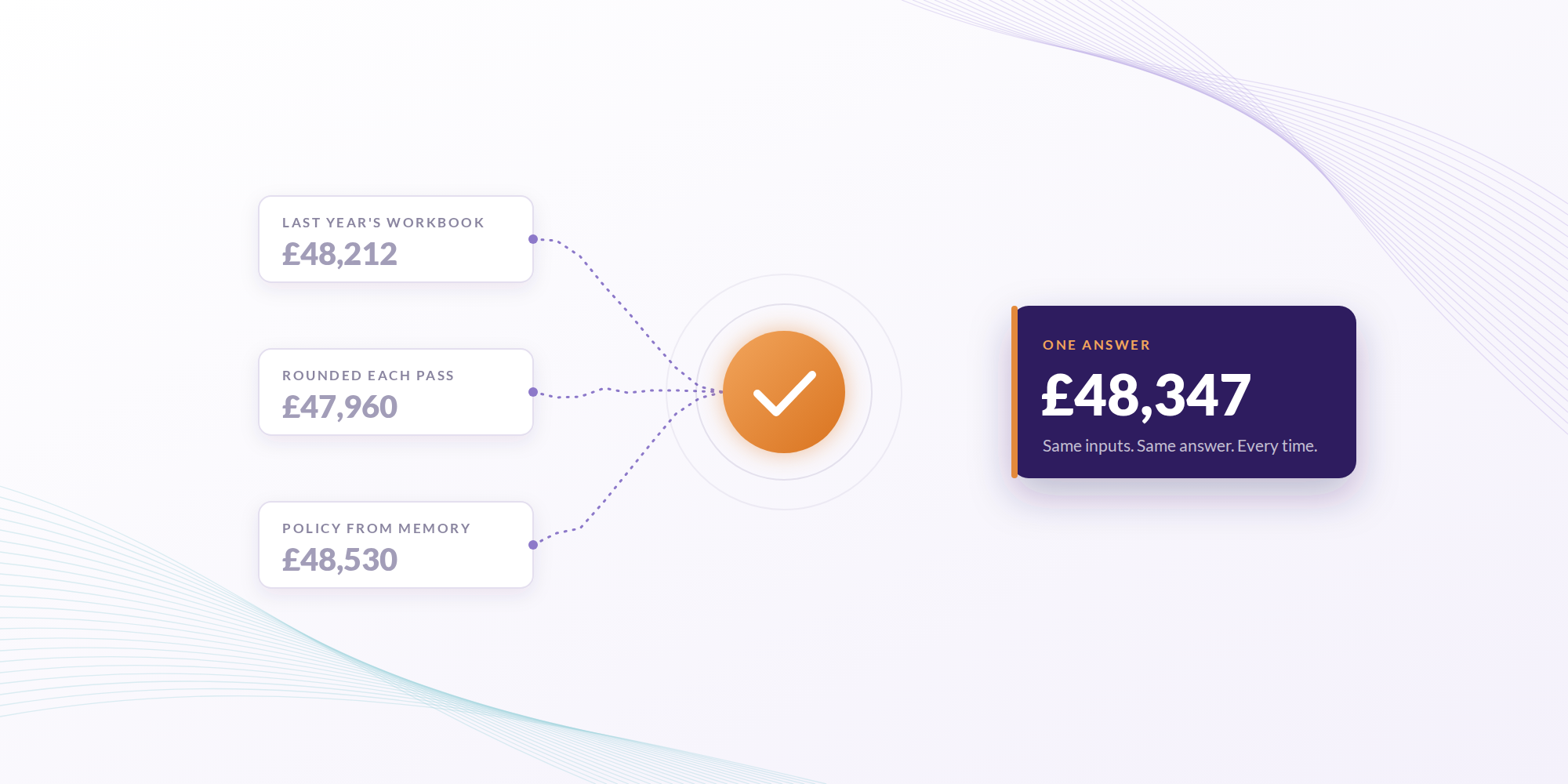
In our work, a figure that’s a penny out is simply wrong. The same inputs need to give the same answer every time, and we need to be able to show exactly how we got there, sometimes years after the fact when an auditor or tax authority comes asking.
Why AI doesn’t do our maths
Large language models work by predicting the most likely answer rather than following fixed rules, so if you ask the same question twice you can get two different results. That’s perfectly fine when you’re drafting an email or summarising a meeting, but it isn’t acceptable for a tax figure that ends up on someone’s payslip or in a filing.
Shadow payroll calculations combine tax rules, exchange rates and gross-ups, which is where the employer pays the tax on the tax and the figure has to be worked out in a loop until it settles. On top of that, the rules change every year, and we often need to rerun a past period using the rules that applied at the time. A model that gives a plausible-looking answer is no help there. If an auditor asks why a number is what it is, “the AI said so” isn’t an answer we’d ever want to give.
So our calculations run on normal code that we’ve written and tested ourselves. It follows the rules as written, it gives the same result every time, and every figure traces back to its inputs and the rates used for that tax year.
Where it does help
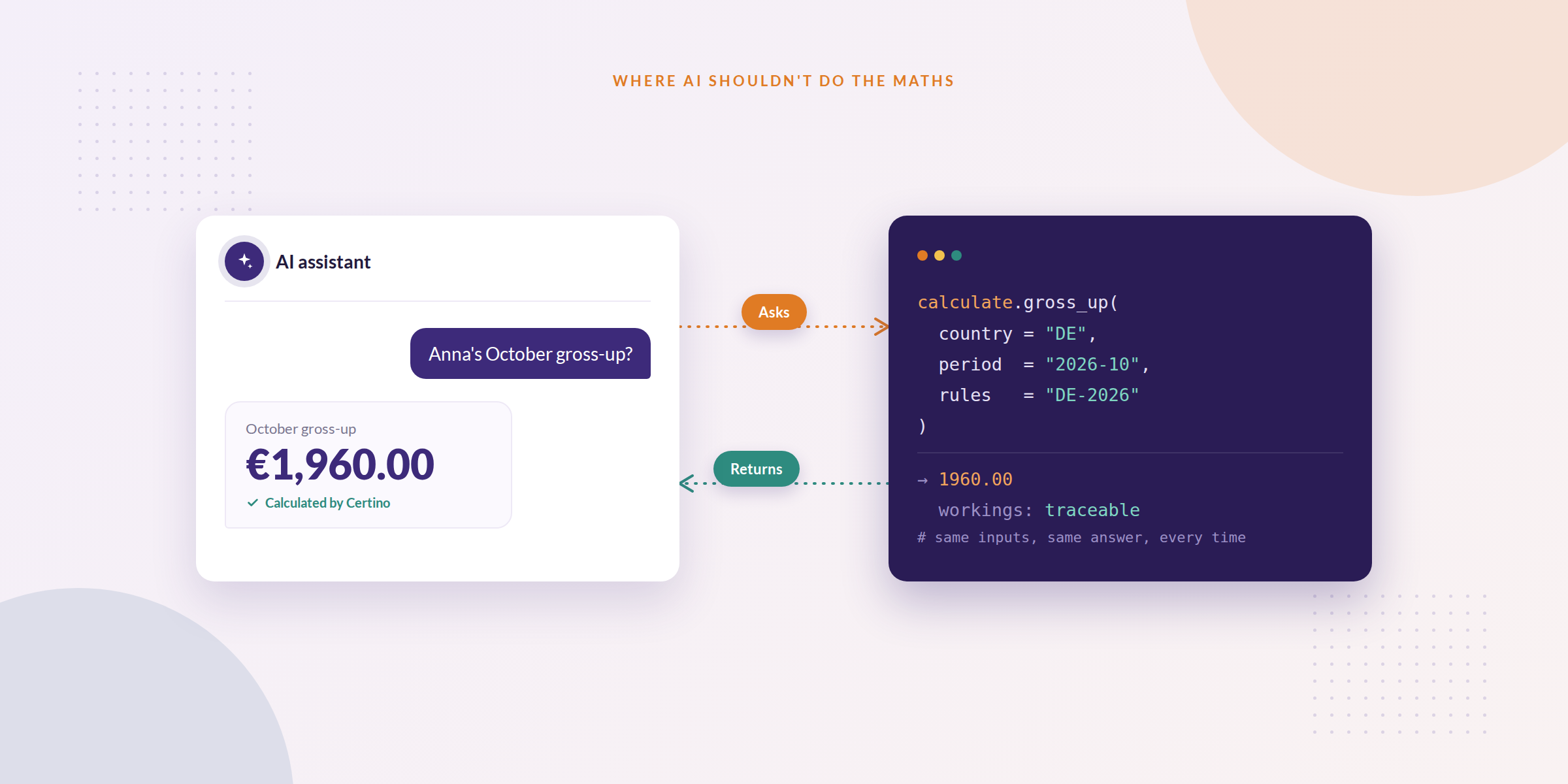
That doesn’t mean we’re avoiding AI, just that we keep it away from the arithmetic. We’ve built a connector that lets AI assistants talk directly to the Certino platform. You ask a question in plain English, the assistant passes it to our system, and our system does the calculation and sends back the real figure along with how it was reached. The AI’s job is to fetch the number and help explain it, never to make one up.
This split plays to each side’s strengths. AI is good at understanding what someone is asking, finding the right information and putting it into words a non-specialist can follow. Our code is good at being exactly right, every time, and being able to prove it.
The rule I work to
My rule is simple: if a number could end up in a tax filing or an audit, our own tested code calculates it. AI can help people find that number, understand it and act on it, and that’s where it earns its place.